How to Treat Acne Without Damaging Your Skin Barrier (Gentle Routine That Works)
This post may contain affiliate links, which means I may earn a small commission at no extra cost to you.
If you’ve ever tried to treat acne and ended up with skin that’s red, raw, peeling, and somehow still breaking out, you’re not alone. It’s one of the most frustrating cycles in skincare and it happens to a lot of people, especially those with sensitive or reactive skin.
The problem is that most acne advice is built around the idea that you need to fight your skin into submission. Strong treatments, aggressive exfoliants, drying ingredients that strip everything away. And for some skin types, that approach works fine. But for sensitive skin (or for anyone whose barrier is already compromised) it almost always makes things worse.
Here’s what’s actually happening when that cycle kicks in and how to treat acne in a way that doesn’t destroy your skin in the process.
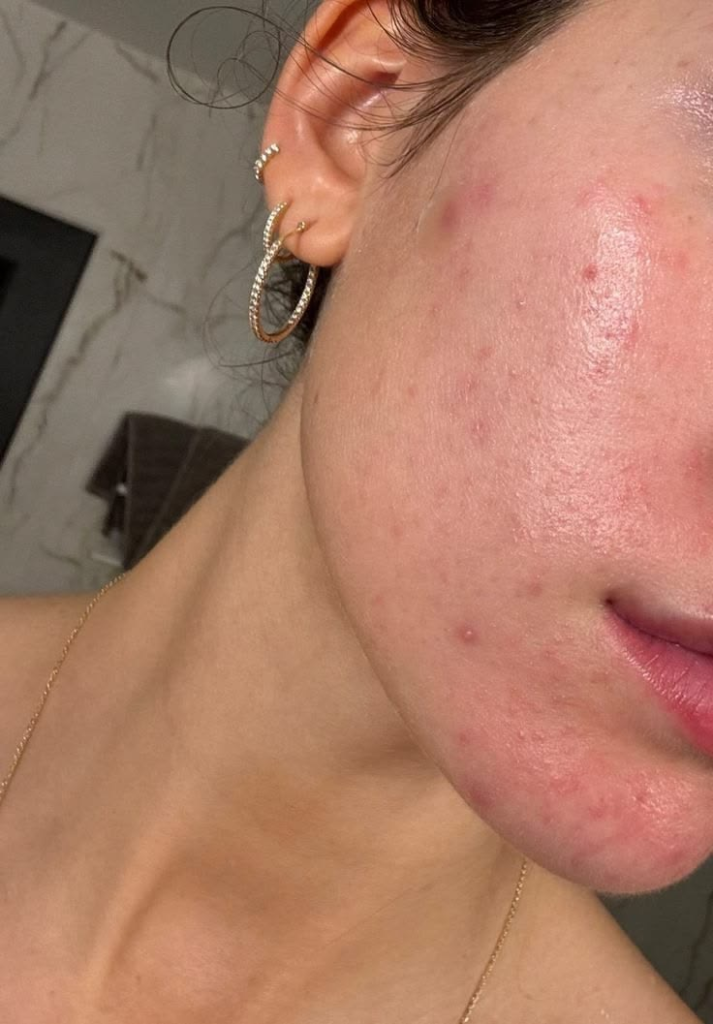
Why acne treatments often backfire on sensitive skin
Most conventional acne treatments work by targeting bacteria, unclogging pores, or speeding up cell turnover. The actives that do this (benzoyl peroxide, salicylic acid, retinol, strong niacinamide concentrations) can be very effective. But they’re also inherently disruptive to your skin barrier and when you use them aggressively or layer too many at once, your barrier takes a hit.
The catch is that a damaged skin barrier actually makes acne worse. When your barrier is compromised, your skin loses moisture faster, becomes more inflamed, and is less able to protect itself from the bacteria and irritants that trigger breakouts in the first place. So you treat the acne, you damage the barrier, the barrier damage creates more inflammation and breakouts, you treat those more aggressively, and the cycle keeps going.
The shift that breaks that cycle isn’t using better acne treatments. It’s supporting your barrier at the same time as you treat the acne and being more intentional about which treatments you use and how.
Get clear on what’s actually causing your breakouts
Before you add a single acne treatment, it’s worth asking whether your current routine might be part of the problem. This sounds counterintuitive but it’s really common. Products that are supposed to help can actually be contributing to breakouts especially if they contain fragrance, heavy oils, or comedogenic ingredients.
If your skin is breaking out and also feels reactive, tight, or irritated, there’s a good chance your barrier is already compromised and your products are making things worse. In that case, the most useful first step is actually stripping your routine back to basics and letting your skin settle before adding anything targeted.
I covered how to do that here → How to Calm Irritated Skin (Simple Routine That Actually Works)
And if you want to understand which ingredients might be causing problems → Ingredients to Avoid for Sensitive Skin (And What to Use Instead)
Build your foundation first
This is the part most people skip straight past and it’s honestly the most important. Before any acne treatment, you need a routine your skin can actually tolerate consistently. That means three things:
A gentle fragrance-free cleanser that doesn’t strip your skin. Over-cleansing and harsh cleansers are two of the most common things that compromise your barrier and make acne worse. You want something that removes what needs to be removed without leaving your skin tight or uncomfortable afterward.
Good options: CeraVe Hydrating Facial Cleanser, Vanicream Gentle Facial Cleanser, La Roche-Posay Toleriane Hydrating Gentle Cleanser.
A simple barrier-supporting moisturizer. This step is non-negotiable even if your skin is oily or acne-prone. Skipping moisturizer doesn’t help acne. It actually makes your skin produce more oil to compensate which can make breakouts worse. Look for ceramides, glycerin, and hyaluronic acid in a lightweight, non-comedogenic formula.
Good options: CeraVe PM Facial Moisturizing Lotion, La Roche-Posay Toleriane Double Repair Moisturizer, Neutrogena Hydro Boost Water Cream.
Daily sunscreen. Non-negotiable regardless of skin type. A lot of acne treatments increase sun sensitivity and UV exposure worsens post-acne marks and inflammation significantly. Mineral sunscreen is usually better tolerated on acne-prone sensitive skin.
Good options: EltaMD UV Clear SPF 46. This one is particularly good for acne-prone skin because it contains niacinamide and is specifically formulated to not clog pores. La Roche-Posay Anthelios Mineral SPF 50 is another solid choice.
For more guidance on building this foundation → Minimal Skincare Routine for Sensitive Skin (Step-by-Step)
The gentle acne treatments that actually work
Once your foundation is solid and your skin feels calm and stable, here’s how to layer in targeted acne treatments without wrecking your barrier.
Salicylic acid — but low percentage and not daily
Salicylic acid is one of the most effective ingredients for acne because it’s oil-soluble, which means it can actually get into pores and dissolve the buildup that causes blackheads and breakouts. But it’s also an exfoliant, which means overusing it is one of the fastest ways to damage your barrier.
For sensitive skin, the approach is low percentage used a few times a week rather than daily, not a toner you swipe all over your face every morning. A 0.5% to 1% concentration used two or three times a week is enough to see results without constantly disrupting your barrier.
Good options: Paula’s Choice Skin Perfecting 2% BHA Liquid Exfoliant is probably the most well-known and consistently recommended salicylic acid product, effective and well-formulated, though start slowly if your skin is reactive. The Inkey List Salicylic Acid Cleanser is a gentler way to incorporate it since it’s a rinse-off formula that spends less time on your skin.
Benzoyl peroxide — use it as a spot treatment, not all over
Benzoyl peroxide is one of the most effective acne-fighting ingredients because it kills acne-causing bacteria directly. But it’s also one of the most drying and irritating especially at higher concentrations.
For sensitive skin, the approach is a low concentration (2.5% is as effective as 5% or 10% for most people and significantly less irritating) used only on active breakouts rather than all over your face. Let it absorb before applying moisturizer over the top to minimize dryness.
Good options: La Roche-Posay Effaclar BPO Multi-Target Acne Treatment with 5.5% Benzoyl Peroxide is a well-tolerated formula that pairs benzoyl peroxide with niacinamide to counteract some of the irritation. PanOxyl Antimicrobial Acne Creamy Wash with 4% Benzoyl Peroxide is another widely recommended option at a gentler concentration.
Hypochlorous acid — the underrated one
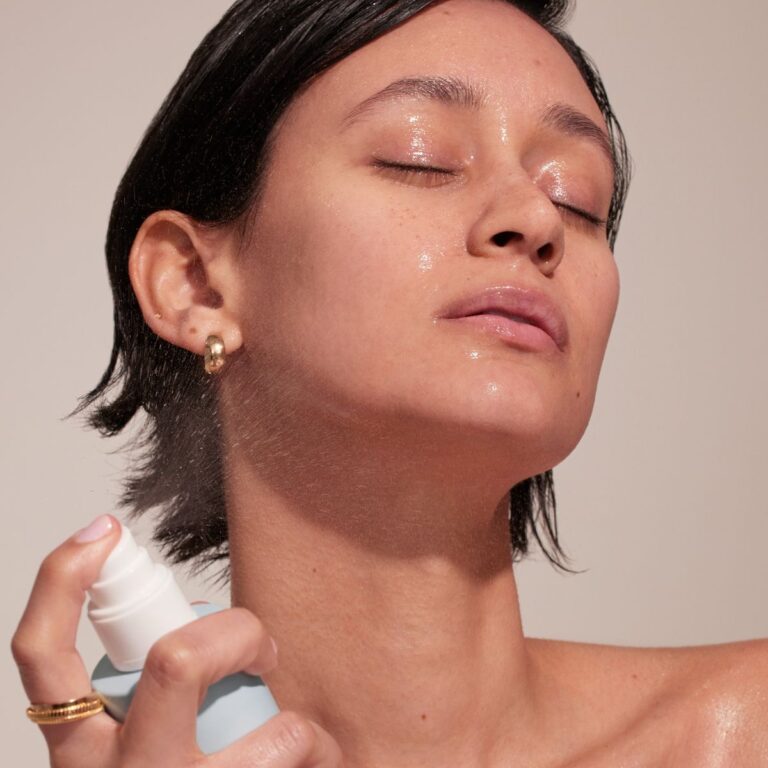
If you haven’t heard of hypochlorous acid for acne, it’s worth knowing about. It’s antimicrobial and anti-inflammatory, works with your skin rather than against it, and is gentle enough to use even when your barrier is compromised. It won’t replace stronger acne treatments but it’s a really useful tool for calming active inflammation and keeping bacteria in check without adding stress to your skin.
Good options: Tower 28 SOS Daily Rescue Facial Spray, Briotech Topical Skin Spray.
I covered hypochlorous acid in more detail here if you want to understand it better → Do You Need Hypochlorous Acid for Sensitive Skin?
Niacinamide — barrier support and redness reduction
Niacinamide isn’t a traditional acne treatment but it earns its place in an acne routine for sensitive skin because it does two things simultaneously: reduces redness and inflammation, and supports your skin barrier. For skin that’s both breaking out and reactive, that dual benefit is really valuable.
Start with a lower concentration (around 5%) and build up slowly. If you find a serum too intense, look for a moisturizer that contains niacinamide instead for a gentler dose.
Good options: The Ordinary Niacinamide 10% + Zinc, Paula’s Choice 10% Niacinamide Booster. Start slowly with either of these if your skin is reactive.
Retinol — save this for when your skin is really stable
Retinol is one of the most effective long-term acne treatments because it speeds up cell turnover and prevents pores from getting clogged. But it’s also one of the most disruptive ingredients for your barrier especially when you’re starting out.
If you want to try retinol, save it for when your skin has been consistently calm and stable for a few weeks, start with the lowest concentration you can find, and use it once a week maximum to begin with. A buffer method (applying moisturizer first and then retinol on top) can help minimize irritation while your skin adjusts.
Good options: La Roche-Posay Effaclar Adapalene Gel 0.1% is a prescription-strength retinoid available over the counter that’s well-formulated for acne-prone skin. The Ordinary Retinol 0.2% in Squalane is a gentle starting point if you’re new to retinol.
The rules for introducing acne treatments on sensitive skin
This is just as important as which treatments you choose.
One thing at a time, always. If you introduce salicylic acid and niacinamide and a new cleanser in the same week and your skin reacts, you have no idea which one caused it. Add one new product, give it two weeks, assess how your skin is responding, then consider adding something else.
Don’t use multiple actives on the same night. Salicylic acid and benzoyl peroxide together, or retinol and niacinamide together. Layering actives is where sensitive skin most commonly gets into trouble. Alternate them on different nights rather than stacking them.
Moisturize after everything. Every single acne treatment (no matter how gentle) should be followed by moisturizer. This isn’t optional for sensitive skin. Your barrier needs that support especially when it’s also dealing with acne-fighting ingredients.
If your skin is actively inflamed or in a flare-up, pause the treatments. This is hard to hear when you’re dealing with breakouts, but when your barrier is compromised actives hit harder and cause more damage than results. Get your skin calm first then reintroduce treatments slowly.
What to avoid
A few things that commonly make acne worse on sensitive skin even though they seem like they should help:
Physical scrubs and harsh exfoliants. These create micro-tears in your skin and spread bacteria rather than treating it. Skip them entirely.
Alcohol-based toners and astringents. Stripping your skin of oil doesn’t fix acne, it just damages your barrier and triggers more oil production.
Fragrance in acne products. A lot of acne treatments contain fragrance and it’s one of the most common reasons they cause irritation. Check the ingredient list even on products specifically formulated for acne.
Layering too many actives. More is not more here. A simple routine with one or two well-chosen treatments used consistently will always outperform an aggressive multi-active approach on sensitive skin.
For a full breakdown of the ingredients most likely to cause irritation → Are Your Skincare Products Causing Your Irritation? (And How to Tell)
What a realistic gentle acne routine looks like
Here’s a simple framework you can actually follow:
Morning
Gentle cleanser → moisturizer → SPF
Keep your morning routine completely free of actives. Your skin has been resting all night and morning is not the time to hit it with treatments.
Night
Gentle cleanser → acne treatment (two to three times a week, not every night) → moisturizer
On the nights you’re not using an acne treatment, just cleanse and moisturize. Your skin needs those recovery nights just as much as the treatment nights.
As needed
Hypochlorous acid mist after workouts or during the day to keep bacteria in check without disrupting your routine.
How long does it take to see results?
This is the honest part. Treating acne gently takes longer than treating it aggressively. You’re not going to see dramatic results in a week. What you will see (if you stick with it) is acne that gradually becomes less frequent and less inflamed, skin that feels calmer and more comfortable, and a routine that doesn’t leave you red and raw.
Most people start seeing real improvement in four to six weeks of consistent gentle treatment. It’s slower than nuking your skin with high-strength actives, but the results last and your skin doesn’t pay the price for it.
The bottom line
Acne and sensitivity aren’t mutually exclusive and you don’t have to choose between treating your breakouts and protecting your barrier. The approach is just more intentional: gentler treatments, introduced slowly, with a solid barrier-supporting foundation underneath everything.
Less aggression. More consistency. And enough patience to let your skin actually respond.
That’s what works for acne-prone sensitive skin and it’s a lot kinder to your skin than the alternative.
Ready to reset before you treat?
If your skin is currently reactive and inflamed and you’re not sure where to start, beginning with a reset is almost always the right call. The 5-Day Gentle Skin Reset is a free guide that walks you through five days of simplifying your routine so your skin can calm down and actually be ready for treatment without adding more to an already overwhelmed routine.
Grab your free reset here and give your skin the foundation it needs. 🤍