Skin Barrier Repair Routine for Sensitive, Acne-Prone Skin (Step-by-Step)
This post may contain affiliate links, which means I may earn a small commission at no extra cost to you.
If your skin is breaking out AND burning AND reacting to products that used to feel completely fine, your skin barrier is probably damaged. And until you address that, nothing else in your routine is going to work the way it should.
This is the post that connects everything. Because whether you’re dealing with burning moisturizer, persistent breakouts, or skin that feels like it’s constantly on the edge of a flare-up, the answer almost always starts in the same place: repairing your barrier first, treating everything else second.
Here’s exactly how to do that.
What is a skin barrier repair routine and why does it matter?
Your skin barrier is the outermost layer of your skin. Its job is simple but essential: keep moisture in, keep irritants and bacteria out. When it’s healthy, your skin feels calm, comfortable, and balanced. When it’s damaged, everything falls apart. Moisture escapes faster than you can replace it, irritants get through that normally wouldn’t, and your skin becomes reactive to things it used to handle without issue.
For acne-prone skin specifically, a damaged barrier is a really frustrating situation because the things that typically treat acne (exfoliants, benzoyl peroxide, retinol) are also the things most likely to damage your barrier further. So you end up in a cycle where treating the acne compromises the barrier, the barrier damage causes more inflammation and breakouts, you treat those more aggressively, and round and round it goes.
A barrier repair routine breaks that cycle. It’s not about abandoning your acne treatment forever, it’s about getting your skin to a stable place where your treatments can actually work without causing collateral damage.
Signs your skin barrier is damaged
Before diving into the routine, it helps to confirm that a damaged barrier is actually what you’re dealing with. Here are the most common signs:
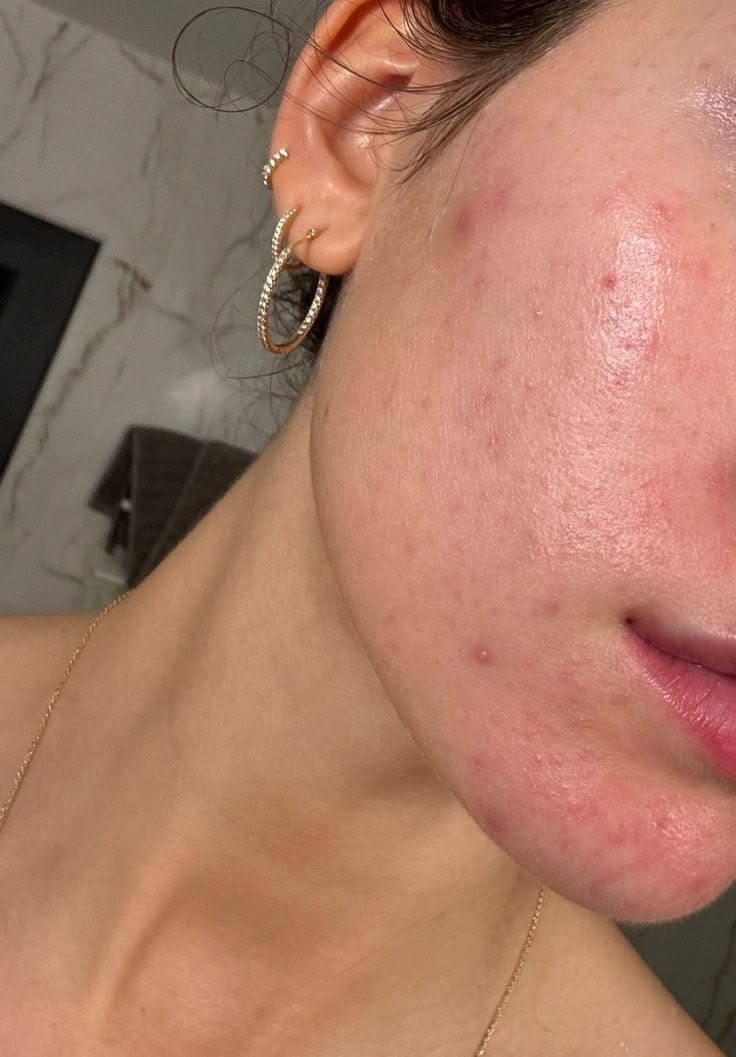
Your skin burns or stings when you apply products, even gentle ones that should feel completely fine. Moisturizer that suddenly stings is one of the clearest signals your barrier is compromised.
You’re experiencing redness or irritation that doesn’t seem to have an obvious cause or that comes and goes without a clear trigger.
Your skin feels persistently dry or tight no matter how much moisturizer you use. When your barrier is damaged, moisture escapes faster than you can replace it which is why dryness that doesn’t respond to moisturizer is such a telltale sign.
You’re dealing with breakouts and sensitivity at the same time. That contradictory combination of oily and acne-prone but also reactive and easily irritated.
Products that used to work fine have suddenly started causing reactions. If your go-to cleanser or moisturizer has started stinging, it’s almost never the product that changed. It’s your barrier.
If your moisturizer specifically has been burning, I covered exactly why that happens and what to do about it here → Why Does My Skin Burn After Moisturizer? (And How to Fix It)

The exact barrier repair routine
This is intentionally simple. Not simplified, just simple. That simplicity is the whole point because every product you add is another potential irritant and your skin needs as little input as possible right now.
Morning
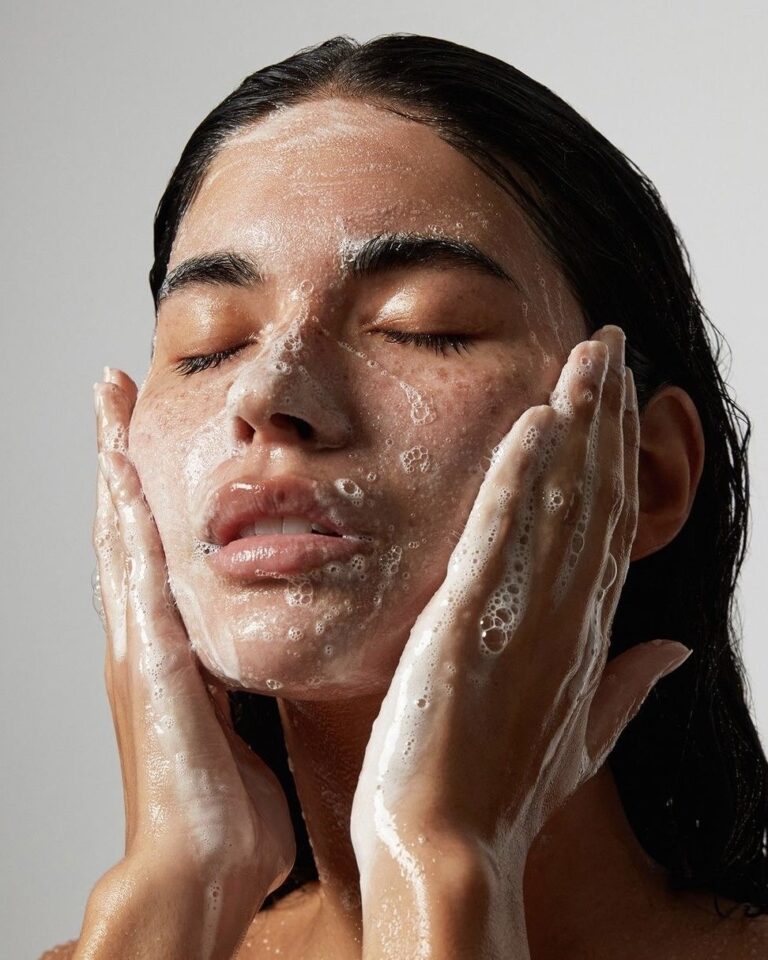
Gentle fragrance-free cleanser. Your morning cleanse should be minimal. If your skin doesn’t feel particularly oily or dirty when you wake up, a rinse with lukewarm water is honestly enough. If you do cleanse, keep it gentle, something creamy and non-foaming that leaves your skin feeling comfortable, not tight or stripped.
Good options: CeraVe Hydrating Facial Cleanser, Vanicream Gentle Facial Cleanser, La Roche-Posay Toleriane Hydrating Gentle Cleanser.
Barrier-supporting moisturizer. Apply while your skin is still slightly damp to seal in hydration. Look for ceramides, glycerin, and hyaluronic acid — the ingredients that actually help your barrier rebuild itself rather than just temporarily masking dryness. Keep it fragrance-free and as simple as possible.
Good options: more on these below in the product section.
Mineral sunscreen. Every morning without exception. UV exposure slows barrier repair, worsens inflammation, and makes post-acne marks significantly harder to fade. For sensitive acne-prone skin, mineral sunscreen with zinc oxide is almost always better tolerated than chemical formulas.
Good options: EltaMD UV Clear SPF 46 is particularly good for acne-prone skin because it contains niacinamide and won’t clog pores. La Roche-Posay Anthelios Mineral SPF 50 is another solid choice especially if your skin also runs dry.
Night
Gentle fragrance-free cleanser. Nighttime cleansing matters more than morning. You’re removing sunscreen, environmental buildup, and everything your skin has been exposed to throughout the day. Use the same gentle cleanser as morning, lukewarm water, and pat dry gently. No hot water, no washcloths, no aggressive rubbing.
Barrier-supporting moisturizer. Same as morning. Apply to slightly damp skin and let it do its work overnight. Nighttime is when your skin does most of its repairing so giving it a solid moisturizer to work with makes a real difference.
That’s the whole routine.
No toner, no serum, no spot treatment, no actives. Just cleanser, moisturizer, and sunscreen in the morning. Cleanser and moisturizer at night. Done.
If that feels too simple, that feeling is exactly right. It means you’re doing it correctly.
For a full step-by-step breakdown of what this looks like in practice → Minimal Skincare Routine for Sensitive Skin (Step-by-Step)
Ingredients that help repair your skin barrier
When you’re choosing products for this routine, these are the ingredients worth prioritizing:
Ceramides are probably the most important one. They’re actually structural components of your skin barrier. Think of them as the building blocks that hold everything together. When your barrier is damaged, ceramide levels drop. Replenishing them topically helps your barrier rebuild itself properly rather than just patching over the damage temporarily.
Glycerin is a humectant that draws moisture into your skin and helps it stay there. It’s gentle, effective, and extremely well tolerated even by the most reactive skin types. If a product has glycerin near the top of the ingredient list that’s a good sign.
Hyaluronic acid holds moisture in the skin and helps with that tight, uncomfortable dryness that comes with a damaged barrier. Apply it to damp skin and always follow with a moisturizer to seal it in. On its own in dry environments it can actually pull moisture out of your skin rather than into it.
Panthenol (also called vitamin B5) is underrated for barrier repair. It helps soothe irritation, supports healing, and improves your skin’s ability to hold onto moisture. A really useful ingredient for skin that’s compromised and reactive.
Centella asiatica (cica) is worth knowing about if your skin is particularly inflamed or red. It’s calming, anti-inflammatory, and well tolerated even on very reactive skin. Shows up more frequently in Korean skincare but increasingly in mainstream products too.
Ingredients to avoid right now
Just as important as what you put on your skin is what you keep off it while your barrier is recovering.
Fragrance in any form. Including natural fragrance, essential oils, and botanical extracts. This is the single most important thing to avoid. It shows up constantly in products that seem completely innocent and it’s one of the most common things that prevents barrier recovery. Check every product in your routine, not just new ones.
Denatured alcohol. Strips moisture from your skin and disrupts your barrier over time. Shows up in a lot of lightweight formulas and toners.
Exfoliating acids AHAs like glycolic and lactic acid, BHAs like salicylic acid. These are useful ingredients for acne-prone skin but they need to wait until your barrier is repaired. Using them now is like trying to fill a bucket with a hole in it.
Retinol and retinoids. Same as above. Effective long-term for acne but too disruptive for skin that’s already compromised. Bench these until your barrier is solid.
Physical scrubs. These create micro-tears in already-damaged skin and make barrier repair take significantly longer. Skip them entirely for now.
For a full breakdown of the ingredients most likely keeping your skin stuck → Ingredients to Avoid for Sensitive Skin (And What to Use Instead)
Best products for barrier repair on sensitive acne-prone skin
You don’t need anything fancy or expensive here. What you need is simple, fragrance-free, and barrier-supportive.
CeraVe Moisturizing Cream. Probably the most widely recommended barrier repair moisturizer and for good reason. It’s packed with ceramides, glycerin, and hyaluronic acid in a fragrance-free formula that actually helps your barrier rebuild rather than just masking dryness. A really reliable starting point for compromised skin. Great for drier or very damaged skin that needs substantial barrier support.
CeraVe PM Facial Moisturizing Lotion. The lighter version of the above. Same barrier-supporting ingredients but a more lightweight texture that works better for skin that’s oily or acne-prone and finds the cream too heavy. Has niacinamide which helps with redness and inflammation at the same time.
Vanicream Moisturizing Cream. The one to reach for if your skin is reacting to literally everything right now. The ingredient list is one of the most minimal you’ll find. No fragrance, no dyes, no common irritants of any kind. Not the most exciting formula but exactly what severely compromised skin needs.
La Roche-Posay Toleriane Double Repair Moisturizer. Lightweight but hydrating with ceramides and niacinamide. A really solid option for acne-prone skin that wants barrier support without a heavy feel.
Avène Tolerance Control Soothing Skin Recovery Cream. Designed specifically for hypersensitive and reactive skin going through a flare-up. An extremely minimal formula with almost nothing that could cause a reaction. Worth knowing about if your skin is in a particularly bad state right now.
For a full breakdown of moisturizers for sensitive skin → Best Moisturizers for Sensitive Skin (Gentle, Non-Irritating Picks)
How long does it take to repair your skin barrier?
This is the question everyone asks and the honest answer is: it depends on how compromised your barrier was to begin with, but most people start noticing real improvement within one to two weeks of consistently following a simple gentle routine.
Mild barrier damage: A little stinging, slight redness, products feeling slightly off. Usually starts to settle within three to seven days of simplifying.
More significant damage: Consistent burning, persistent redness, skin that’s reacting to almost everything. Can take two to four weeks or longer to fully recover.
The most important factor isn’t which products you use, it’s consistency and patience. The biggest mistake people make is seeing a little improvement after a week and immediately reintroducing their actives or adding new products before their barrier has had enough time to fully stabilize. Every time you disrupt the process you’re essentially resetting the clock.
Give it more time than you think you need. Your skin will tell you when it’s ready: products feel comfortable, redness has settled, that tight reactive feeling is gone. That’s your signal that your barrier has recovered enough to start thinking about the next step.
When to reintroduce acne treatments
Once your skin has been calm and comfortable for at least two to three weeks (no burning, no redness, products feeling normal), you can start thinking about bringing acne treatments back in, slowly and intentionally.
One product at a time, always. Start with the gentlest option first and give it two to three weeks before adding anything else. For most sensitive acne-prone skin, the order that tends to work well is: niacinamide first, then low-percentage salicylic acid a few times a week, then benzoyl peroxide as a spot treatment if needed, and retinol last once your skin is solid.
Use actives two to three times a week rather than daily to start. Your skin needs recovery time between applications and that frequency is enough to see real results without constantly re-stressing your barrier.
Keep your barrier repair foundation in place throughout. The gentle cleanser, the barrier-supporting moisturizer, the daily sunscreen. These stay regardless of what treatments you add. They’re what keep your barrier healthy enough to tolerate the treatments.
And if something starts to burn or sting again, that’s your signal to pull back, not push through.
For a full breakdown of how to reintroduce acne treatments without damaging your barrier → How to Treat Acne Without Damaging Your Skin Barrier (Gentle Routine That Works)
The bottom line
Repairing your skin barrier isn’t complicated. It’s just less exciting than most skincare advice, which is probably why people skip past it when they’re desperately trying to fix their skin.
But the reality is if your barrier is damaged, nothing else works properly. Your acne treatments cause more irritation than results. Your moisturizer stings. Your skin reacts to things it shouldn’t. And the more you try to push through with actives and treatments, the worse it gets.
Give your barrier the attention it needs first. Simplify everything, focus on the right ingredients, and be patient enough to let your skin actually recover. Once your barrier is healthy, everything else (the acne treatments, the actives, the more targeted products) works so much better without issue.
Simple, consistent, and gentle. That’s the whole routine. And it’s more than enough.
Ready to start your reset?
If your skin is currently reactive, burning, or just completely overwhelmed and you don’t know where to begin, The 5-Day Gentle Skin Reset was made for exactly this moment. It’s a free five-day guide that walks you through stripping everything back and giving your skin the calm and consistency it needs to start recovering. No overwhelming steps, no complicated ingredient lists, just clear gentle guidance one day at a time.
Your skin barrier can heal. Give it the chance to do that. Grab your free reset here. 🤍