Why Does My Skin Burn After Moisturizer? (And How to Fix It)
This post may contain affiliate links, which means I may earn a small commission at no extra cost to you.
If your skin burns when you apply moisturizer (that immediate stinging, uncomfortable sensation right after you put on something that’s supposed to feel soothing) something is off. And the good news is it’s almost always fixable once you understand what’s actually causing it.
The short answer is that burning skin after moisturizer is almost always a sign that your skin barrier is compromised, your moisturizer contains something irritating, or both. Let’s break down exactly what’s going on and how to get your skin feeling comfortable again.

Why your skin is burning after moisturizer
Your skin barrier is damaged
This is by far the most common reason and it’s worth understanding properly because it changes how you approach the fix.
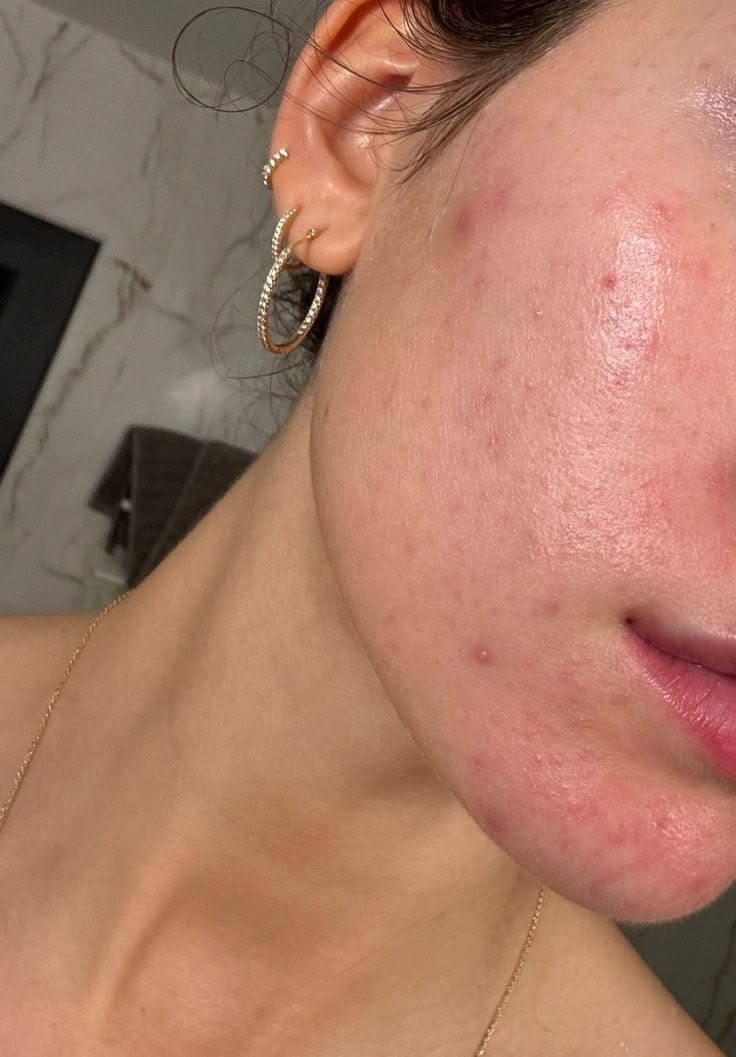
Your skin barrier is the outermost layer of your skin. It keeps moisture in and irritants out. When it’s healthy, products glide on comfortably and your skin feels calm. When it’s damaged, that protective function breaks down and things that would normally feel fine start to sting. Even gentle, well-formulated moisturizers can burn on a compromised barrier, not because the product is wrong, but because your skin has lost its ability to tolerate much of anything right now.
Barrier damage usually comes from a handful of really common things: over-exfoliating with acids or scrubs, using too many active ingredients at once, harsh cleansers that strip your skin, or just layering too many products until your skin hits its limit. It can happen gradually over time without you realizing it which is why the burning can feel like it comes out of nowhere.
If you want a deeper breakdown of what a damaged barrier looks and feels like → Signs Your Skin Barrier Is Damaged (And How to Fix It)
Your moisturizer contains irritating ingredients
This one surprises people because it seems like moisturizer should be one of the safest things you put on your skin. But a lot of moisturizers (even ones marketed as gentle, hydrating, or for sensitive skin) contain ingredients that can cause real irritation on reactive or compromised skin.
Fragrance is the biggest culprit. It shows up in so many moisturizers, including ones that seem completely innocent, and it’s one of the most common causes of that burning sensation. Denatured alcohol is another one. It’s used to make formulas feel lightweight but it’s drying and disruptive to your barrier over time. Essential oils, despite their reputation as natural and gentle, can also be surprisingly irritating for reactive skin.
If you want to know exactly which ingredients to watch out for → Ingredients to Avoid for Sensitive Skin (And What to Use Instead)
You’re overloading your skin
Sometimes it’s not about any one product, it’s about the accumulation of everything together. Cleanser, toner, serum, treatment, moisturizer, all layered on skin that’s already dealing with a lot. Every product adds more ingredients for your skin to process and when your barrier is already stressed that stack of products can push things over the edge. The moisturizer gets the blame because it’s the last thing you applied, but the problem was building long before that.
Your acne treatments are weakening your barrier
This is an incredibly common pattern for anyone treating acne alongside sensitive skin. Benzoyl peroxide, salicylic acid, and retinol are effective ingredients but they’re also inherently disruptive to your barrier, especially when overused or layered together. Your barrier gets progressively more compromised with each use and then your moisturizer stings because your skin is already too raw to tolerate anything.
It’s not that your moisturizer suddenly became the wrong product. It’s that your barrier needs to recover before anything else can feel comfortable.
For more on how to treat acne without destroying your barrier → How to Treat Acne Without Damaging Your Skin Barrier (Gentle Routine That Works)
How to fix it
Step one: pause the actives
Temporarily stop everything that could be contributing to barrier damage (exfoliating acids, retinol, benzoyl peroxide, strong acne treatments). I know that’s hard to hear when you’re trying to manage breakouts, but your skin cannot repair itself while it’s constantly being pushed. Give it at least three to seven days of complete simplicity before reassessing.
This isn’t permanent. It’s a reset.
Step two: switch to a gentle moisturizer
If your current moisturizer is stinging, it needs to go (at least for now). What you’re looking for is fragrance-free, minimal ingredients, and barrier-supporting without any actives. No exfoliants hiding in the formula, no essential oils, no alcohol.
Some options that tend to be very well tolerated even on compromised skin:
CeraVe Moisturizing Cream. Probably the most widely recommended option for damaged, reactive skin. It’s packed with ceramides to help your barrier repair itself and the ingredient list is straightforward and gentle. Great for skin that needs serious barrier support.
Vanicream Moisturizing Cream. Probably the safest option if your skin is reacting to literally everything right now. The formula is about as minimal as it gets: no fragrance, no dyes, no common irritants of any kind. A really reliable reset product.
La Roche-Posay Toleriane Sensitive Fluide Protective Moisturizer. Designed specifically for skin that’s hypersensitive and reactive. Fragrance-free, minimal, and formulated to calm rather than irritate. A good choice if CeraVe or Vanicream feel too basic and you want something slightly more elevated.
Avène Tolerance Control Soothing Skin Recovery Cream. Worth knowing about if your skin is severely compromised. An extremely minimal formula designed for skin that’s in a real flare-up state. One of the gentlest options available.
Step three: strip your routine all the way back
While your skin is recovering, your routine should be simple. Not simplified, but simple.
Morning: gentle cleanser → moisturizer → sunscreen. Night: gentle cleanser → moisturizer.
That’s it. No extras, no layering, no experimenting with anything new. The goal right now is to stop the cycle of irritation and give your skin uninterrupted time to repair.
For a full step-by-step routine to follow during this period → Minimal Skincare Routine for Sensitive Skin (Step-by-Step)
Step four: focus on barrier repair ingredients
When you’re choosing products right now, these are the ingredients to prioritize: ceramides, glycerin, hyaluronic acid, and panthenol. These actively help your barrier repair itself and hold onto moisture rather than just temporarily masking discomfort. They’re not exciting but they’re exactly what compromised skin needs.
What to avoid during this period: fragrance in any form, alcohol denat., essential oils, and anything with actives in it, even gentle-sounding ones.
When to reintroduce your acne treatments
Once your skin has settled (no more burning, products feel comfortable, skin feels calm and predictable), you can start thinking about bringing actives back in, slowly and intentionally.
One product at a time, always. Give it two to three weeks before adding anything else. And use it two to three times a week maximum rather than daily, at least to start. Your skin needs recovery time between applications and that’s actually enough frequency to see real results without constantly disrupting your barrier.
If something starts to sting again, that’s your signal to pull back, not push through.
Some questions that come up a lot
Can my moisturizer actually cause burning even if it’s a good product?
Yes. If your barrier is already compromised, even well-formulated gentle moisturizers can sting. It’s not necessarily about the product being bad, it’s about your skin not being in a state where it can tolerate much. Fix the barrier first.
Should I stop moisturizing altogether if it burns?
No, please don’t. Your skin still needs hydration to repair itself. The answer is to switch to something gentler, not to skip it entirely. Dry, unprotected skin takes significantly longer to heal.
How long does it take for the burning to stop?
For mild barrier damage, most people notice real improvement within three to seven days of simplifying. More significant damage can take up to two weeks or longer. The most important thing is staying consistent with the simple routine and not introducing anything new until things are settled.
What if even the gentlest products are still stinging?
If your skin is burning with truly minimal fragrance-free products and you’ve simplified everything, it’s worth seeing a dermatologist. Sometimes persistent burning is a sign of something like contact dermatitis or rosacea that needs a different approach.
The bottom line
Burning skin after moisturizer is your skin’s way of telling you something needs to change. It’s not random, it’s not just your skin being difficult, and it’s not something you have to just push through. It’s a clear signal that your barrier is compromised and your routine (or your products) are asking more of your skin than it can handle right now.
Simplify everything. Switch to something gentle. Give your skin time to recover. And then, once things are calm, rebuild slowly and intentionally.
That’s the approach that actually breaks the cycle, not finding a better moisturizer to push through the burning with.
Want to give your skin a proper reset?
If your skin is burning, reactive, and you’re not sure where to start, The 5-Day Gentle Skin Reset was made for exactly this moment. It’s a free five-day guide that walks you through stripping everything back and giving your skin the calm and consistency it needs to actually start recovering. No overwhelming steps, no complicated ingredient lists, just clear gentle guidance one day at a time.
Grab your free reset here and give your skin the break it needs. 🤍