Do You Need a Serum for Sensitive Skin? (What Actually Helps)
This post may contain affiliate links, which means I may earn a small commission at no extra cost to you.
If you’ve been wondering whether you should add a serum to your routine, the honest answer is: probably not right away. And if your skin is currently reactive, irritated, or just not feeling settled definitely not yet.
I know that’s not what the skincare industry wants you to hear. Serums are everywhere, they’re heavily marketed, and there’s a lot of pressure to feel like you’re missing something if you’re not using one. But for sensitive skin, a serum is never the foundation of a good routine. It’s an optional add-on that only makes sense once everything else is already working.
Let me explain what I mean.
Why serums aren’t a priority for sensitive skin
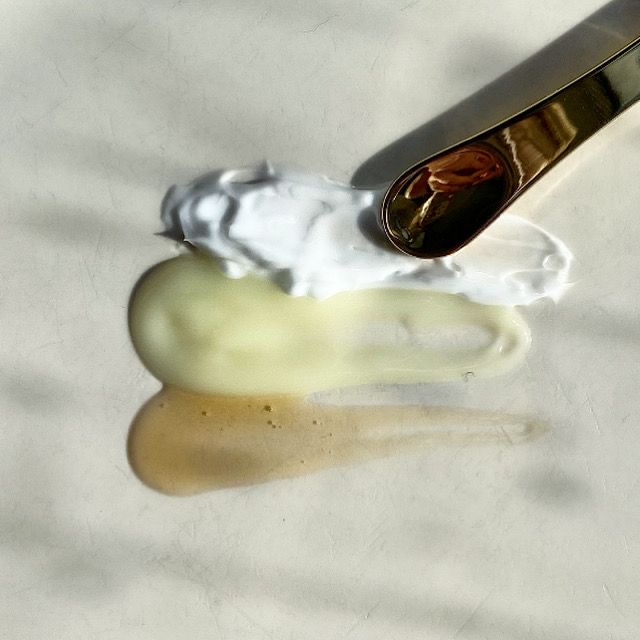
The purpose of a serum is to deliver concentrated active ingredients (things like vitamin C for brightening, niacinamide for redness, hyaluronic acid for hydration). They’re designed to target specific concerns and they can be very useful when your skin is in a stable place.
But if your skin barrier is compromised or your skin is reactive, those concentrated actives are more likely to cause irritation than results. A damaged barrier can’t process strong ingredients the way healthy skin can. Things that would be completely fine on someone else’s skin can sting, cause redness, or trigger breakouts on yours, not because the product is bad, but because your skin isn’t ready for it yet.
The other issue is that serums add another layer of ingredients to your routine. And for sensitive skin, more ingredients means more potential triggers. Every product you add is another chance for something to cause a reaction and when you’re already dealing with reactive skin that’s the last thing you need.
So before you even think about a serum, the question to ask is: is my skin actually calm and stable right now? If the answer is no (if you’re still dealing with redness, stinging, flare-ups, or products that don’t seem to agree with your skin), a serum isn’t going to fix that. Getting back to basics will.
If you’re not sure where to start with that, this covers it → How to Calm Irritated Skin (Simple Routine That Actually Works)
What your skin actually needs first
Before any serum enters the picture, your routine needs a solid foundation. That means a gentle fragrance-free cleanser that doesn’t strip your skin, a simple moisturizer with ceramides and glycerin to support your barrier, and daily sunscreen. If those three things are working well and your skin feels calm and consistent, then, and only then, does it make sense to think about adding something extra.
A lot of people skip straight to serums hoping they’ll fix the problem when the problem is actually that the foundation isn’t stable yet. A serum layered on top of an already-reactive routine is just more for your skin to deal with.
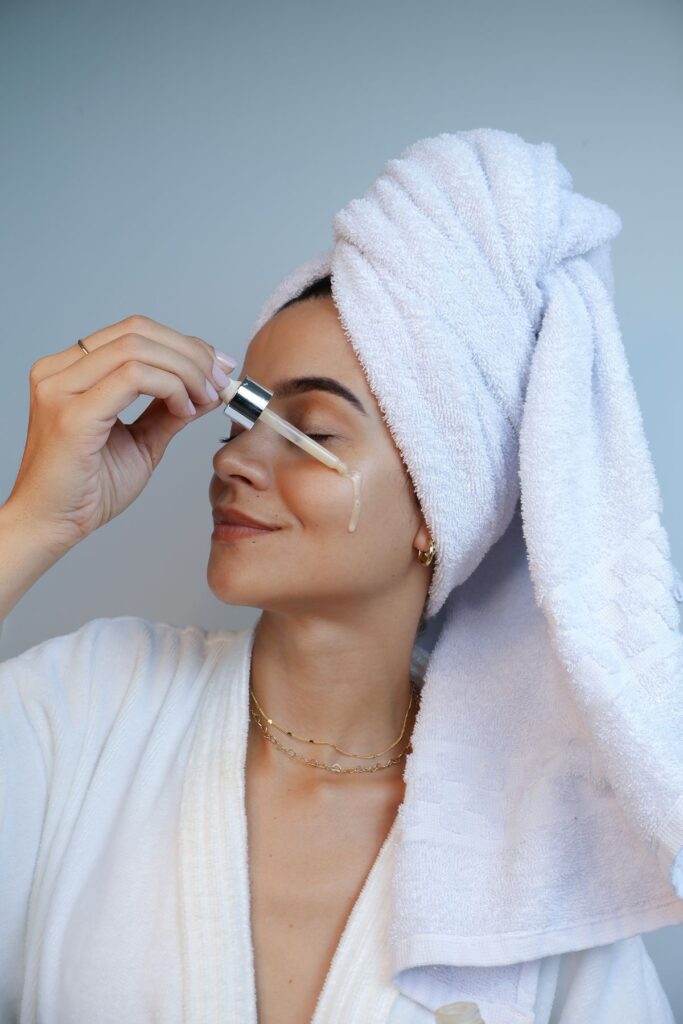
Okay, but what if your skin IS stable and you want to try one?
If your skin has been calm and settled for a few weeks and you want to add a targeted product, here’s how to do it without undoing your progress.
Hyaluronic acid — the lowest-risk starting point
Hyaluronic acid is probably the lowest-risk serum ingredient for sensitive skin. It’s hydrating rather than active, it doesn’t push your skin to do anything, and it’s very well tolerated by most skin types. If you want to try a serum and you’re not sure where to start, this is the most sensible first step.
The Ordinary Hyaluronic Acid 2% + B5 is a simple, affordable option that works well for most people. If you want something with a slightly more hydrating feel, Neutrogena Hydro Boost Hyaluronic Acid Serum is another widely tolerated option, just double check the ingredient list as formulations can vary by region.
Niacinamide — helpful for redness, but introduce slowly
Niacinamide can be really helpful for reducing redness and supporting your barrier, but introduce it slowly and start with a lower concentration. Some sensitive skin types tolerate it beautifully while others find higher percentages irritating.
The Ordinary Niacinamide 10% + Zinc is widely used and easy to find, but worth starting cautiously if your skin is prone to reactions. Some people find 10% a bit much at first. Paula’s Choice 10% Niacinamide Booster is another solid option that tends to be well formulated and gentle. If you want to start lower, look for a moisturizer that contains niacinamide rather than a standalone serum. That way you’re getting a smaller concentration without having to hunt for a specific product. CeraVe PM Facial Moisturizing Lotion includes niacinamide in a lower concentration, making it easier for sensitive skin to tolerate.
Centella asiatica — worth knowing about for redness and irritation
Centella asiatica (sometimes called cica) is worth knowing about if your skin tends toward redness and irritation. It’s a calming ingredient with a good track record for reactive skin and tends to be well tolerated even by sensitive skin types.
The SKIN1004 Madagascar Centella Ampoule is probably the most widely recommended cica serum in the sensitive skin world. It has minimal ingredients, is fragrance-free, and is consistently well tolerated. Dr. Jart+ Cicapair Serum is another popular option with a slightly richer feel, though it’s worth checking the full ingredient list if your skin is very reactive.
What to avoid for now
Vitamin C in strong concentrations, exfoliating acids as a serum step, retinol, and anything marketed as “powerful” or “high strength.” These aren’t off the table forever, they’re just better saved for when your skin is in a really stable place and you can introduce them extremely slowly.
If you’re curious about vitamin C specifically, start with a very low percentage L-ascorbic acid formula or look for a gentler derivative like ascorbyl glucoside. These tend to be less irritating than high-strength vitamin C serums. If you’re looking for a place to start, The Ordinary Ascorbyl Glucoside Solution 12% is a more beginner-friendly option that tends to be easier for sensitive skin to tolerate. But honestly save this one until your skin has been stable for a while.
The rule for introducing any serum
One product at a time. Always. Add the serum and use it consistently for at least two weeks before adding anything else. That way if something causes a reaction you know exactly what it was. If you add a serum, a new moisturizer, and a new cleanser in the same week and your skin reacts, you have no idea which one caused the problem.
Patch testing is worth doing too. Apply a small amount to the inside of your wrist or behind your ear for a few days before putting it all over your face. It takes a little patience but it saves a lot of frustration.
And if something stings, causes redness, or makes your skin feel worse consistently, stop using it. Doesn’t matter how many good reviews it has or how well it works for everyone else. Your skin’s response is always the most reliable information you have.
The honest answer
You don’t need a serum to have great skin. Plenty of people with sensitive skin do best with a simple three-step routine and nothing else and their skin is calmer and more comfortable for it.
A serum can be a nice addition when the timing is right and your skin is actually ready for it. But it’s never the thing that fixes reactive skin and adding one too soon almost always makes things worse rather than better.
Get your foundation solid first. Keep things simple. And if you eventually want to add a serum, do it slowly and intentionally with one of the gentler options above.
That’s the approach that actually works for sensitive skin and it’s a lot less overwhelming than it sounds.
Ready to start from the beginning?
If your skin has been reactive and you’re not sure where to start, The 5-Day Gentle Skin Reset was made for exactly this. It’s a free five-day guide that walks you through simplifying your routine and giving your skin the space it needs to actually calm down. No overwhelming steps, no complicated ingredient lists, just gentle and clear guidance one day at a time.
Grab your free reset here and give your skin the break it’s been asking for. 🤍